Ingenuity, applied.
About ACS
Applied Conservation Studio (ACS) is built from experience. Seth Gartland and Adam Jenkins are Professional Associates of AIC (American Institute for Conservation), each with more than 20 years in the conservation field. Seth built his practice through Lodestone Conservation, Adam through Adam Jenkins Conservation Services.
In 2025, they merged to create Applied Conservation Studio, joined by conservation specialist Toby Canfield. Together, they bring more than four decades of combined experience in sculpture, architectural, and decorative arts conservation.The three recognized that the work they cared about most required intentional collaboration: more capacity, more capability, more reach, and a shared belief that conservation belongs to everyone.
ACS operates from two facilities in Philadelphia, in Germantown and Brewerytown, bringing together AIC credentialed leadership, skilled technicians, and broad in-house capabilities.
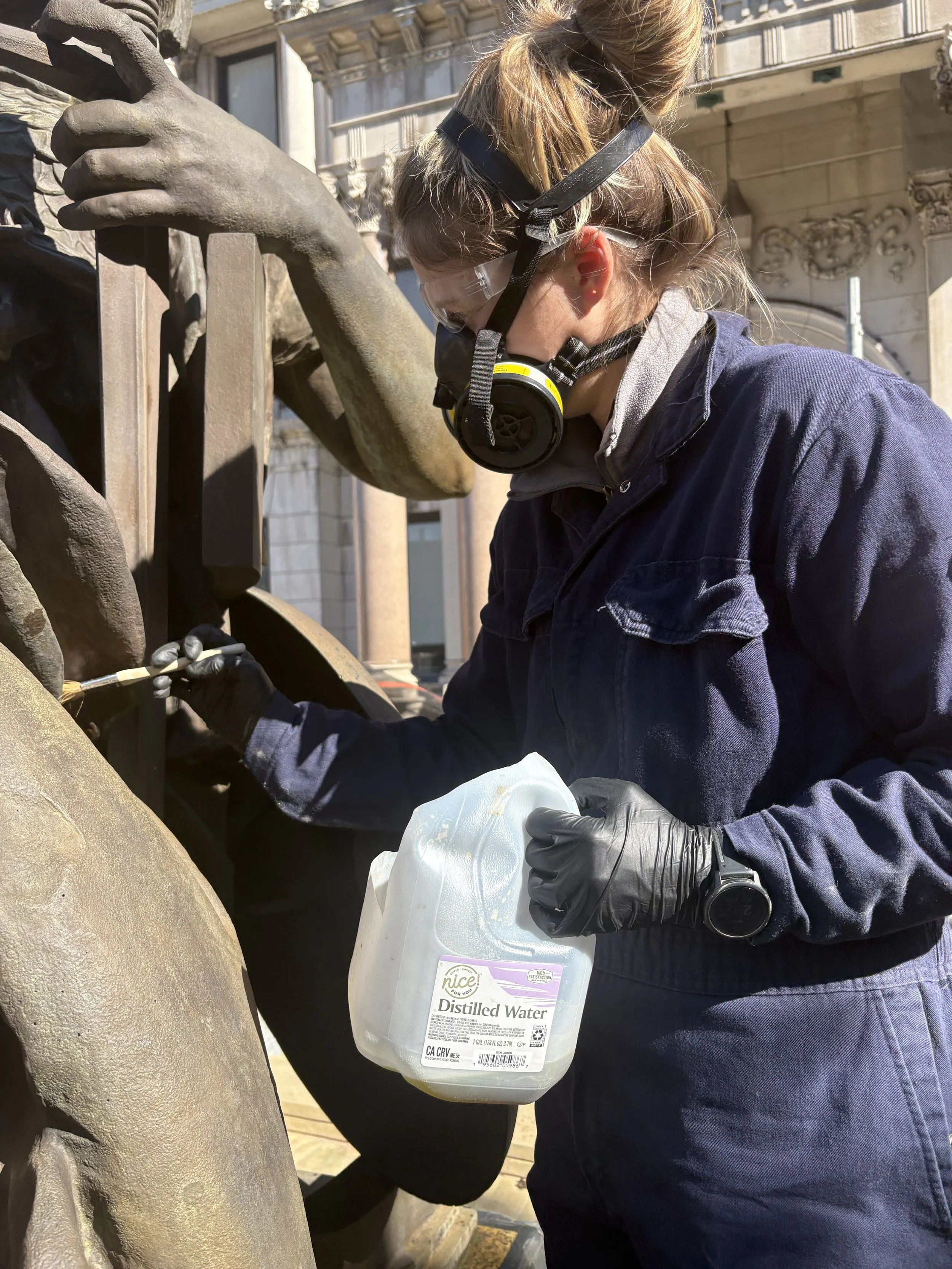
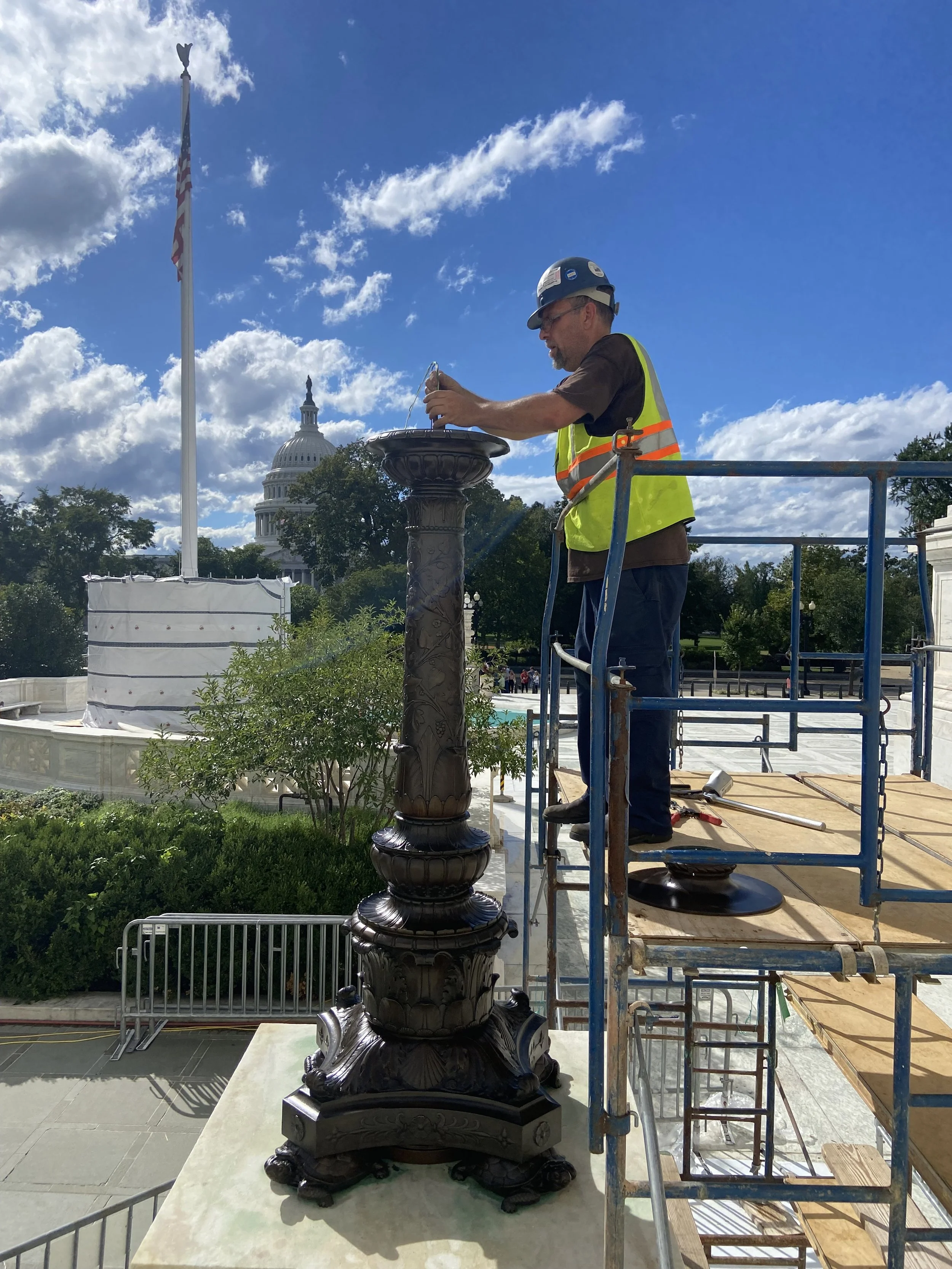
Our clients include higher education, government, nonprofits, historic neighborhoods, and cultural institutions, spanning architectural, sculpture, object, mosaic, and painted surface conservation across a range of materials, from metal and stone to glass, ceramic, and wood. Notable projects include ancient mosaics at the Princeton University Art Museum, the Rocky statue at Philadelphia International Airport, and the outdoor lamp posts at the Supreme Court of the United States. We're also proud of our community-based projects, including Polite Baptist Church, Friends of the Lenape Cemetery, and the Church of the Holy Apostles and the Mediator.
We bring ingenuity and a problem solving approach to every project.
Our team
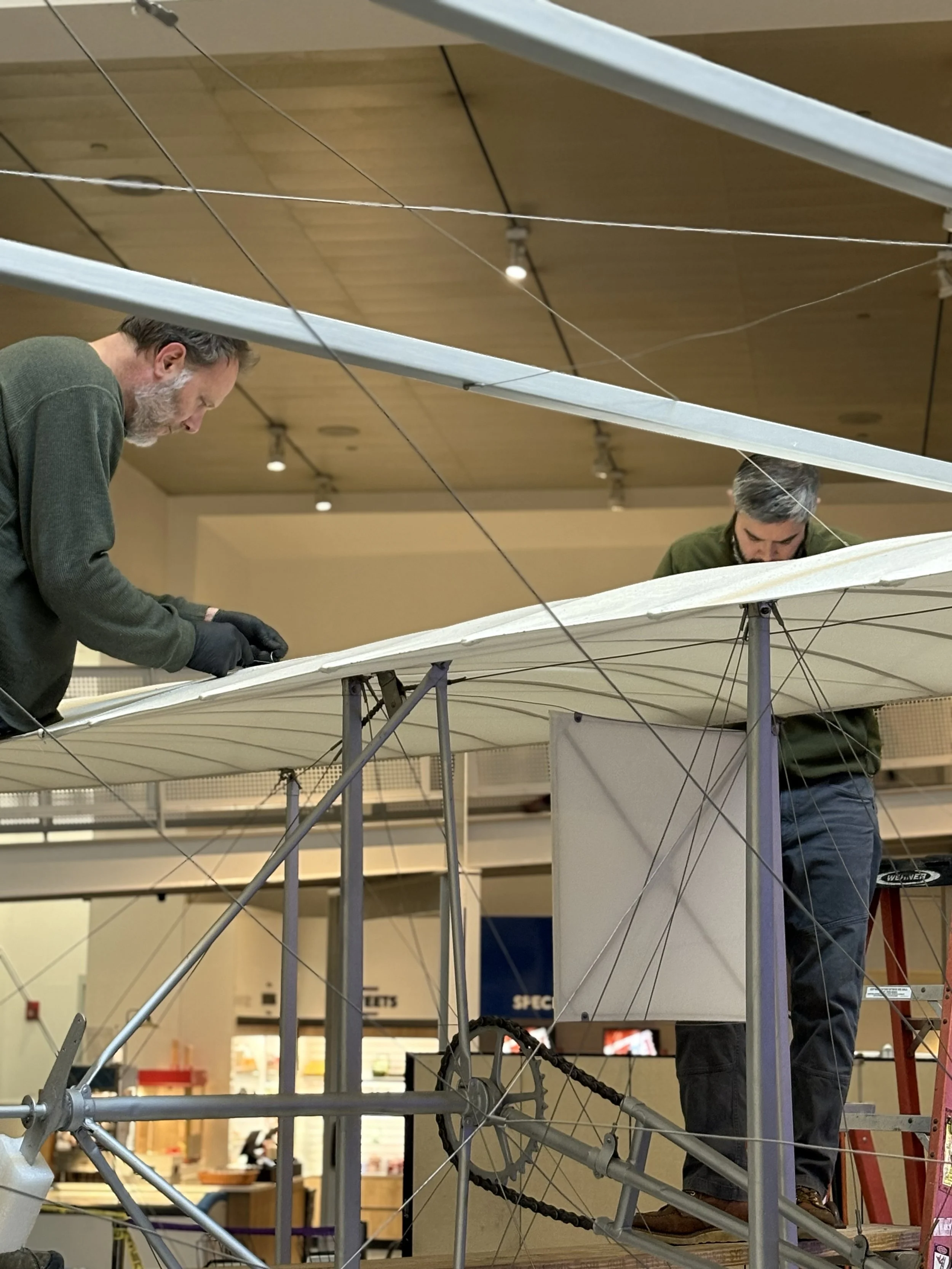
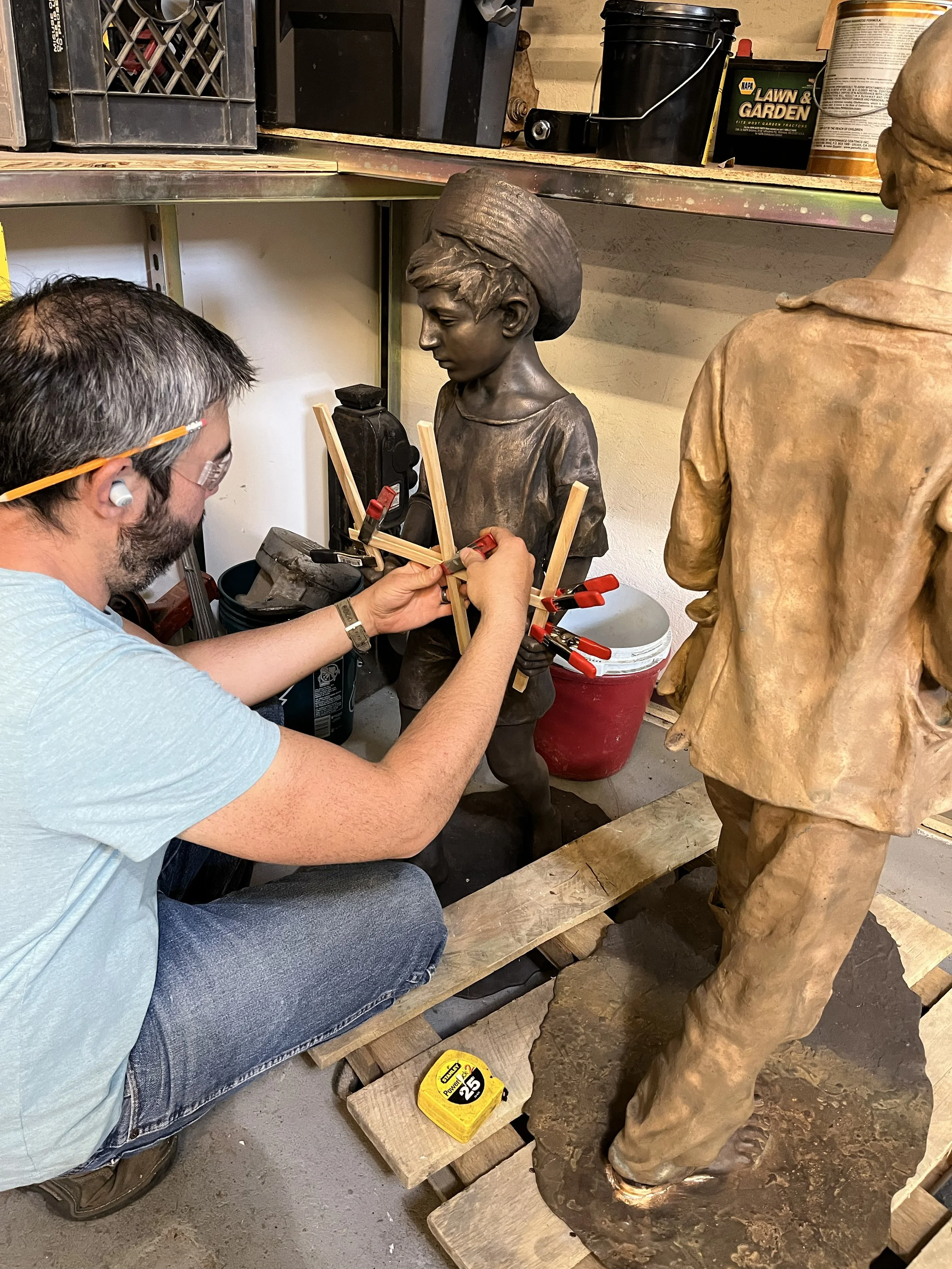
Our team includes conservators, technicians, and fabricators with backgrounds in conservation, metalworking, foundry practice, precious metals, fabrication, rigging, and installation. This multidisciplinary approach allows ACS to solve complex structural and material challenges while maintaining the thoughtful, object-centered principles that define conservation.
We don’t begin with a preferred treatment method. We begin with the object. Every project presents its own history, materials, condition, and challenges. Our role is to understand those variables first, then apply the scientific knowledge, craftsmanship, and practical problem-solving that will best preserve the object for future generations.
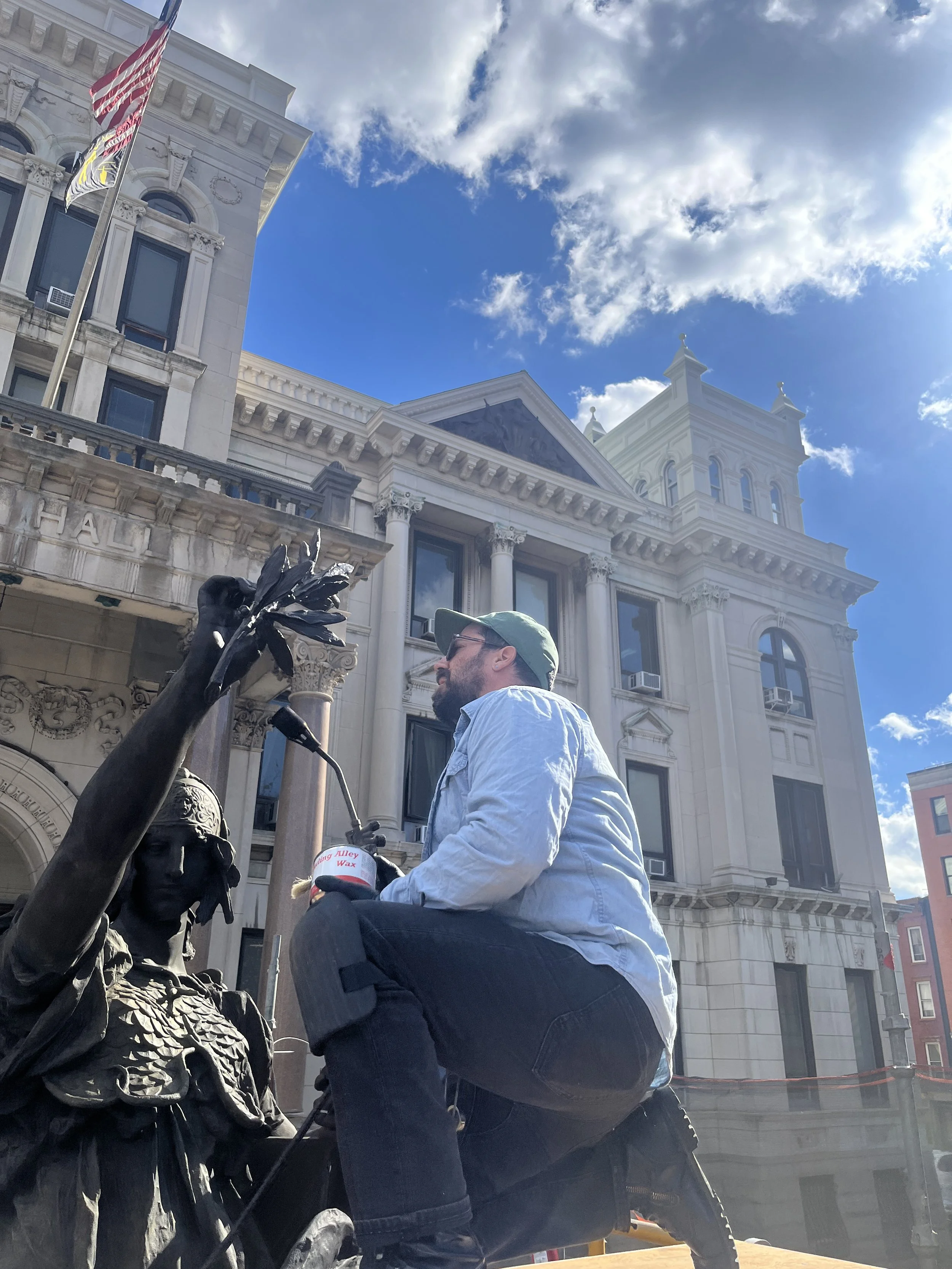
We believe conservation is most successful when scientific understanding, skilled craftsmanship, and practical problem-solving work together. That philosophy guides every project we undertake, whether stabilizing a fragile artifact in the studio, restoring a monumental public sculpture in the field, or preserving an architectural feature that has served its community for generations.
Whether we’re working at the conservation bench, in the fabrication shop, or on-site at a historic landmark, we approach every project with technical rigor, collaboration, and respect for the history entrusted to our care.